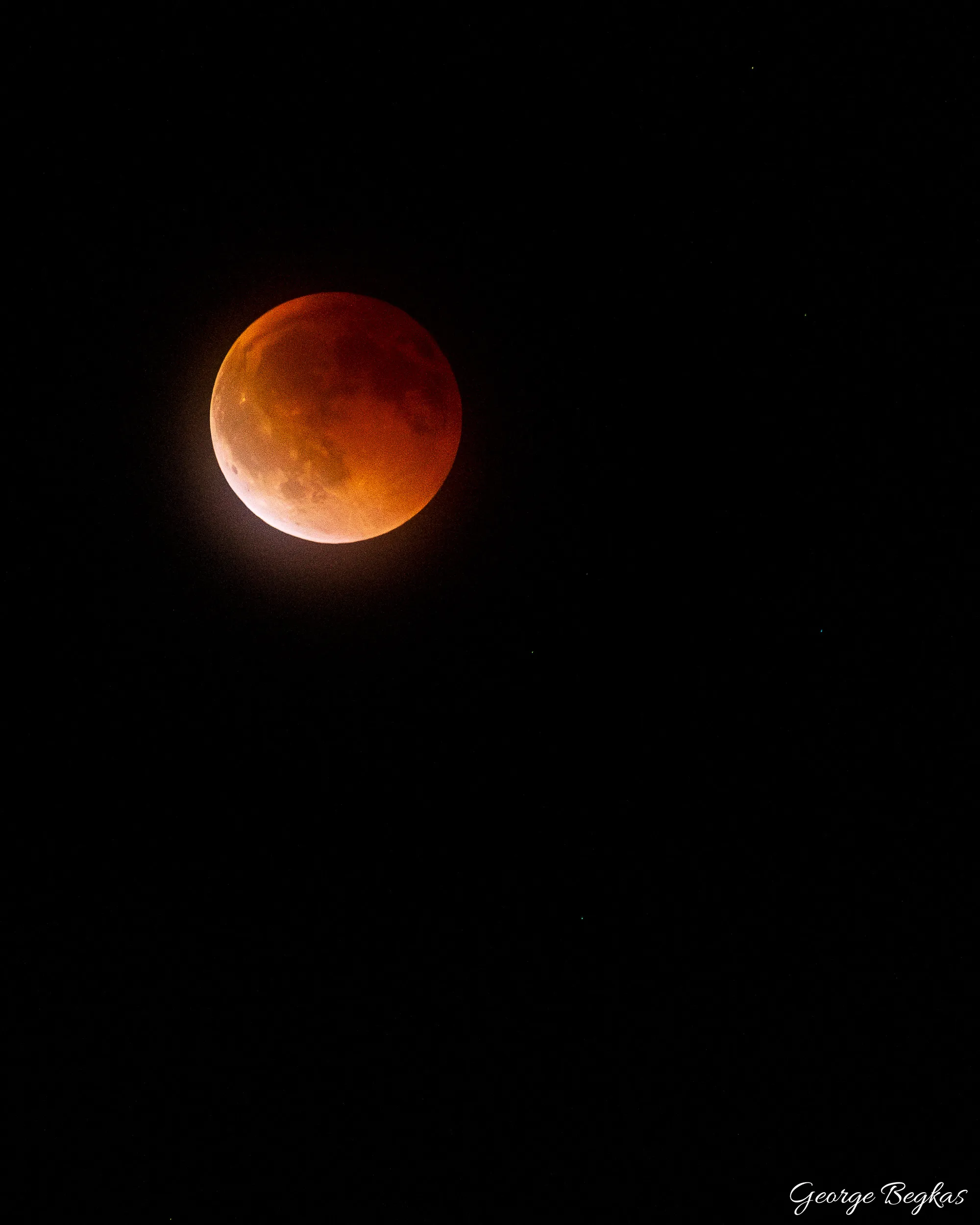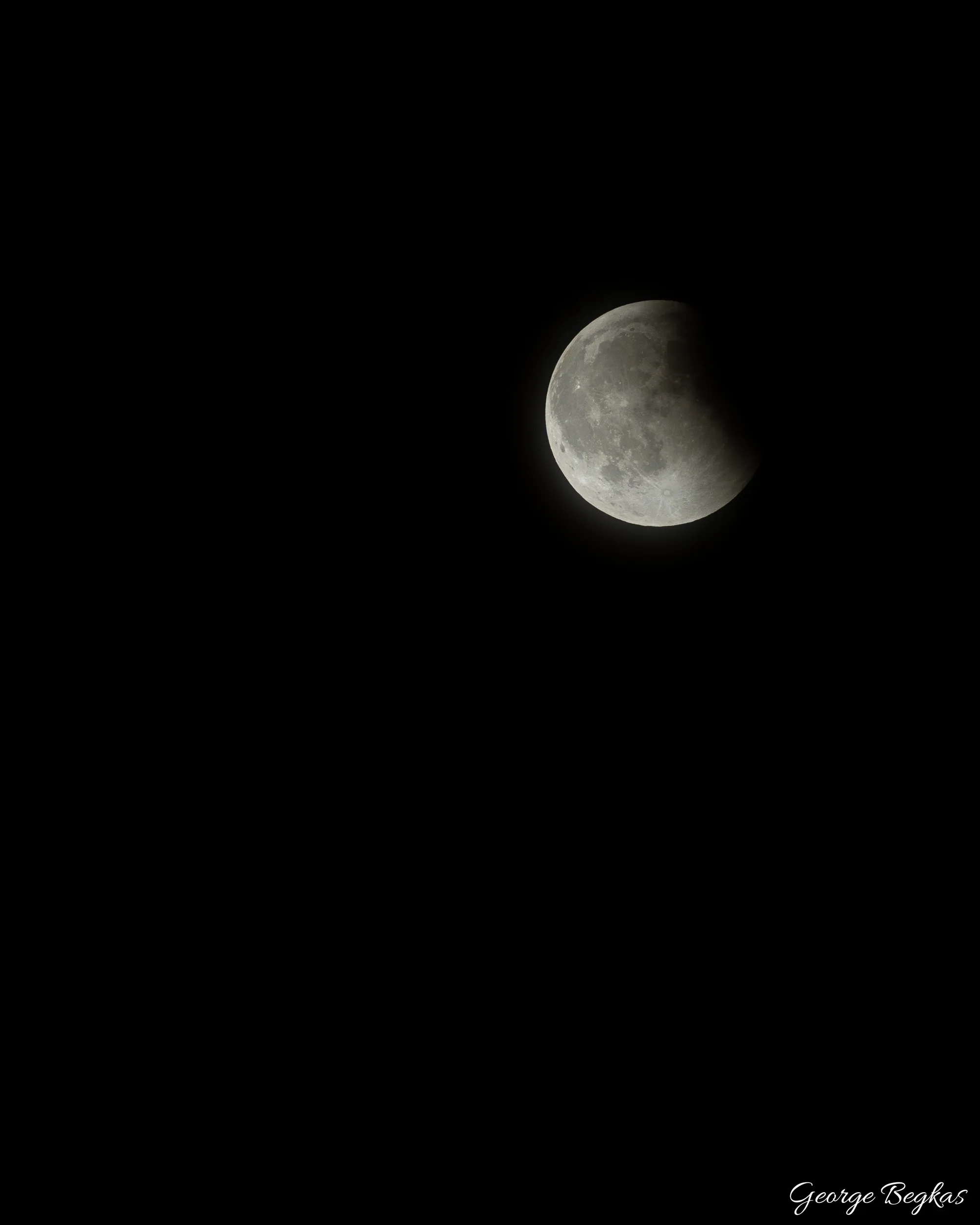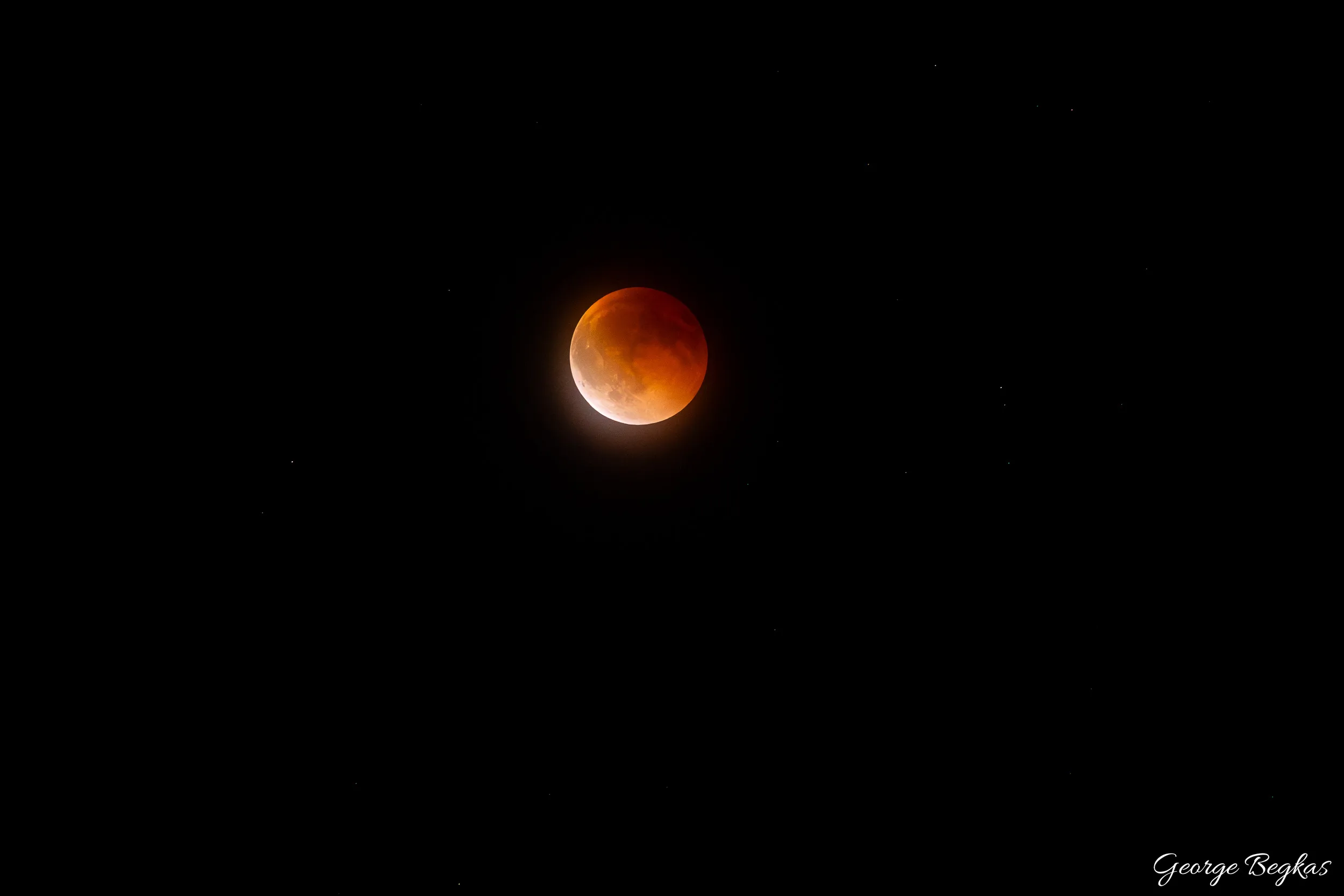
2025 was a year of experimentation for me as a photographer. I spent much of it trying new techniques and subjects, and one of the highlights was the opportunity to photograph a total lunar eclipse, commonly known as a blood moon, in early September.
The weather was still pleasantly warm after the summer, and I had spent the days leading up to the event preparing. I read guides to understand the theory behind lunar eclipse photography, carried out test shots the previous evening, and noted all the important timings: moonrise, the beginning of totality, maximum eclipse, the end of totality, and everything in between. On paper, it all seemed straightforward.
The weather, however, had other plans.
From my location, the Moon was already in total eclipse when it rose above the horizon. Unfortunately, a thick layer of clouds stretched across the skyline, hiding it from view. It wasn’t until nearly half an hour later that the Moon finally emerged through a thinner section of cloud cover. By then, the conditions were far from ideal. The eclipsed Moon was already much dimmer than usual due to its deep red colour, and the lingering clouds made it even darker. Suddenly, all the carefully researched settings and techniques I had planned to use no longer applied.
I remember feeling frustrated. Opportunities like this are rare, and the next total blood moons visible from Europe won’t occur until December 2029 and October 2032. Those eclipses will take place even later in the year, during early winter and deep autumn respectively, when weather conditions are often less favourable and the chances of clear skies may be even lower.
Despite the challenges, this shoot turned out to be one of the most rewarding photographic experiences of the year. It demanded far more adaptation and improvisation than I had expected, but the final images exceeded my expectations given the conditions. Once again, the experience reinforced one of photography’s most satisfying lessons: overcoming the obstacles is often just as rewarding as the photographs themselves.
All photographs were captured with a Canon EOS R6 Mark II paired with a Canon RF 100–400mm F5.6–8 IS USM lens, mounted on a carbon fibre travel tripod.