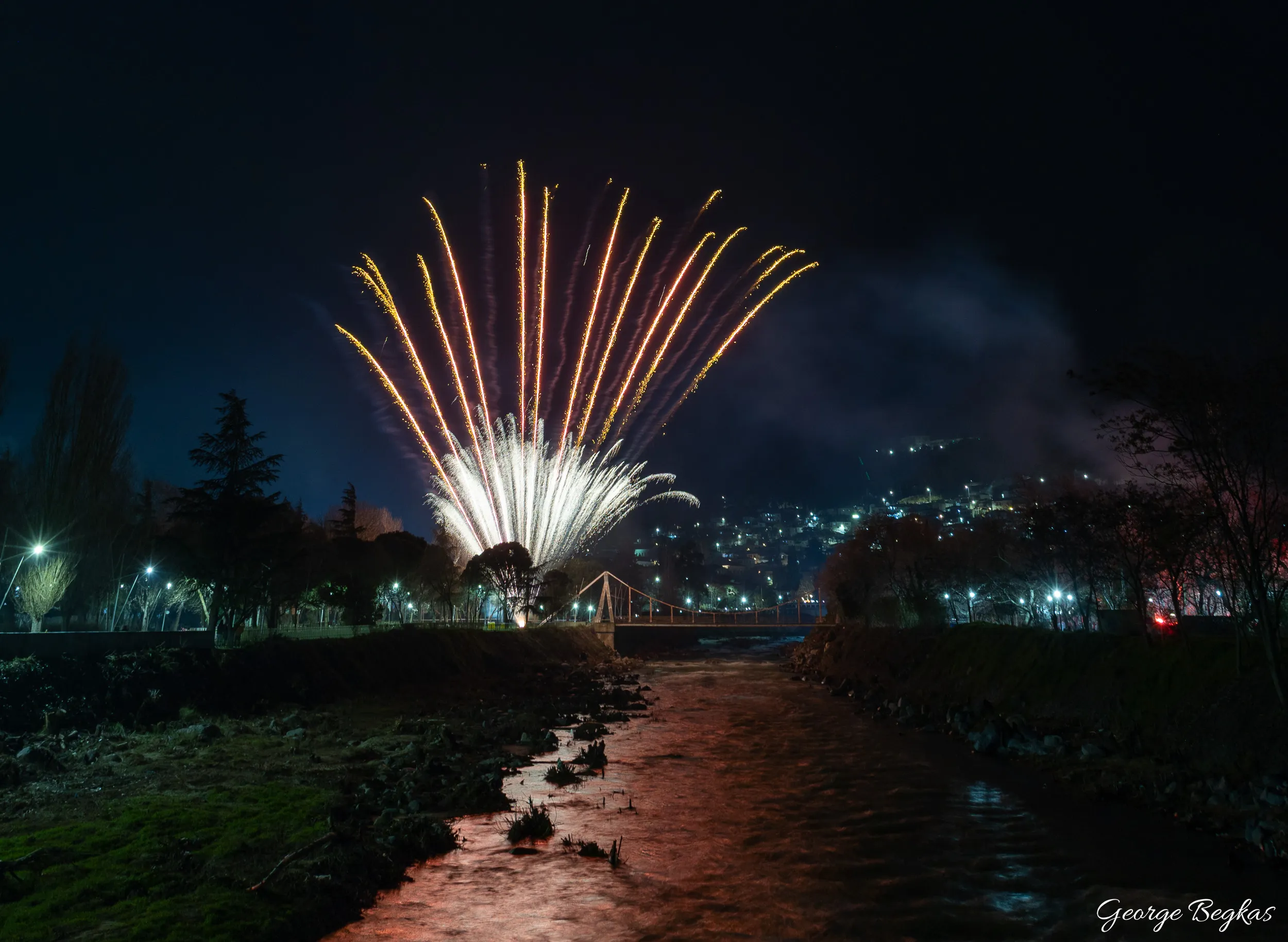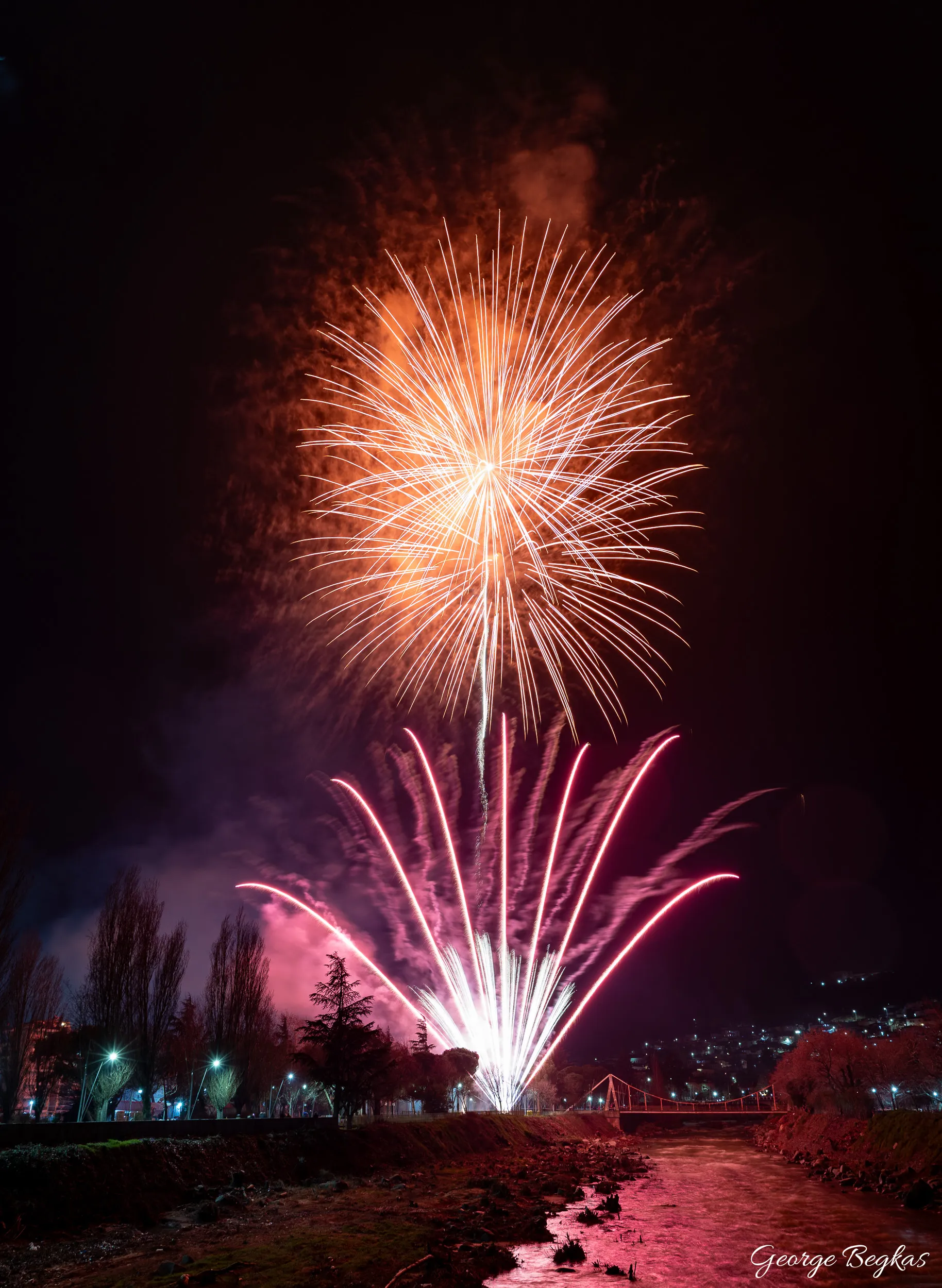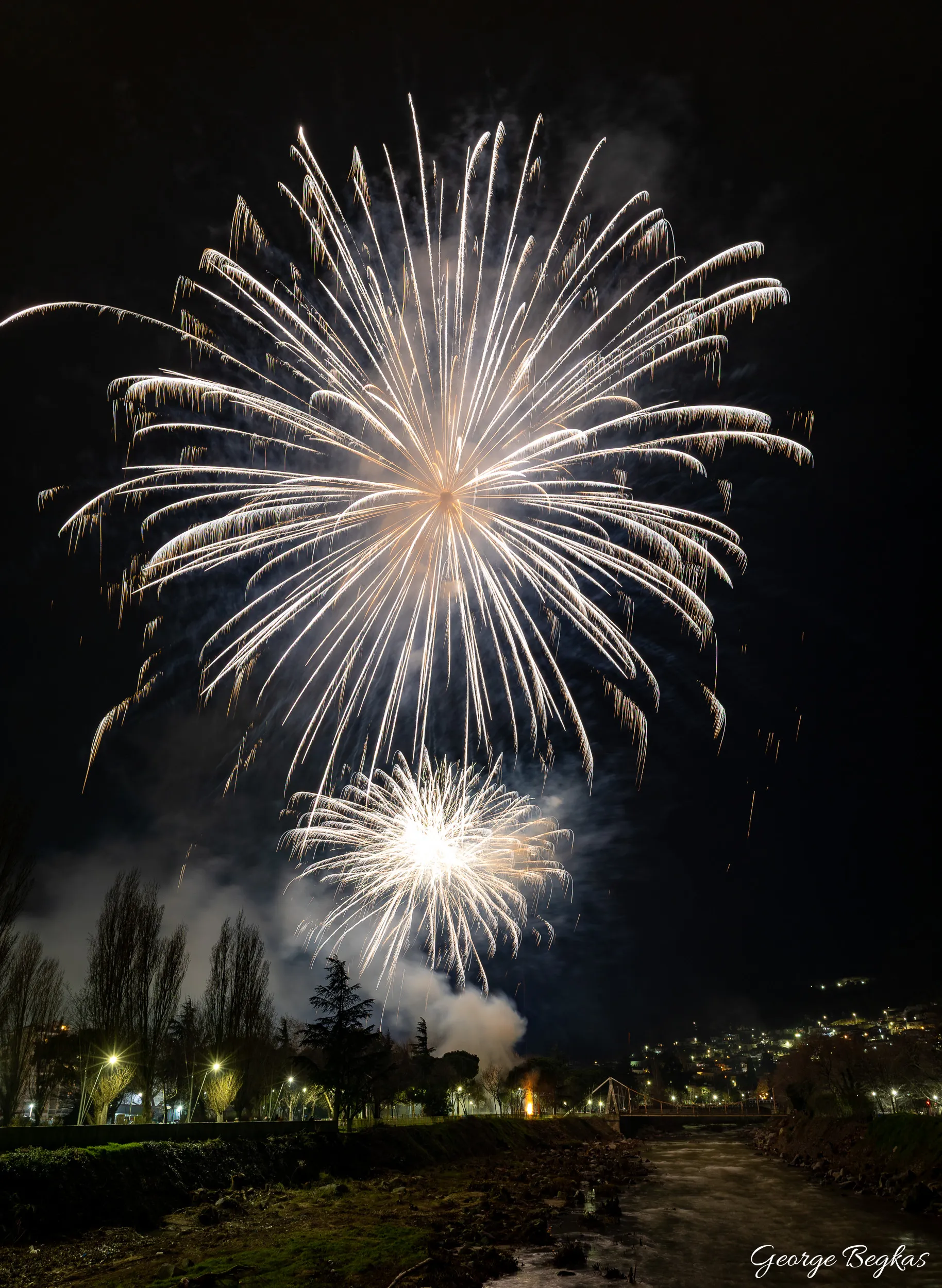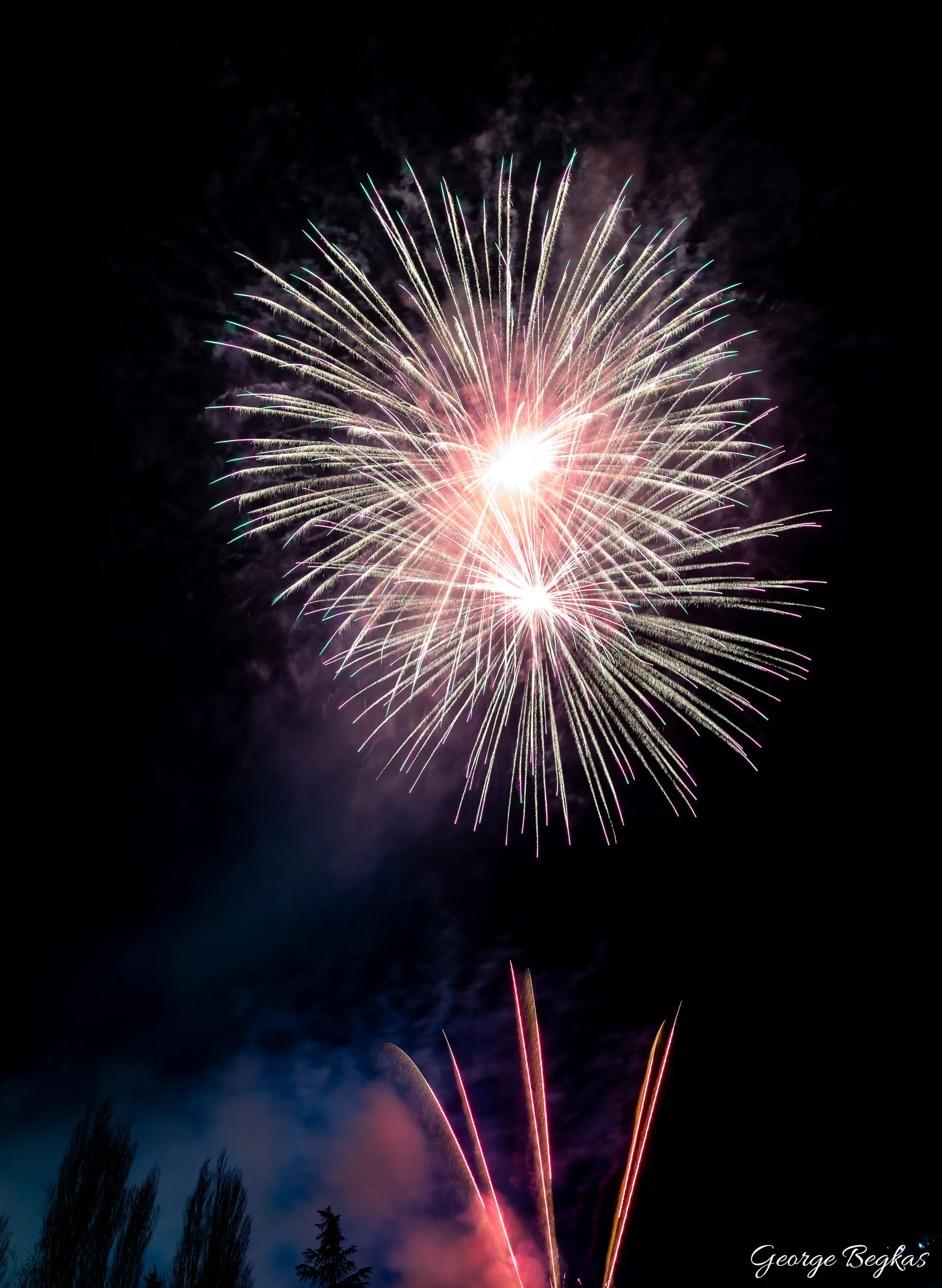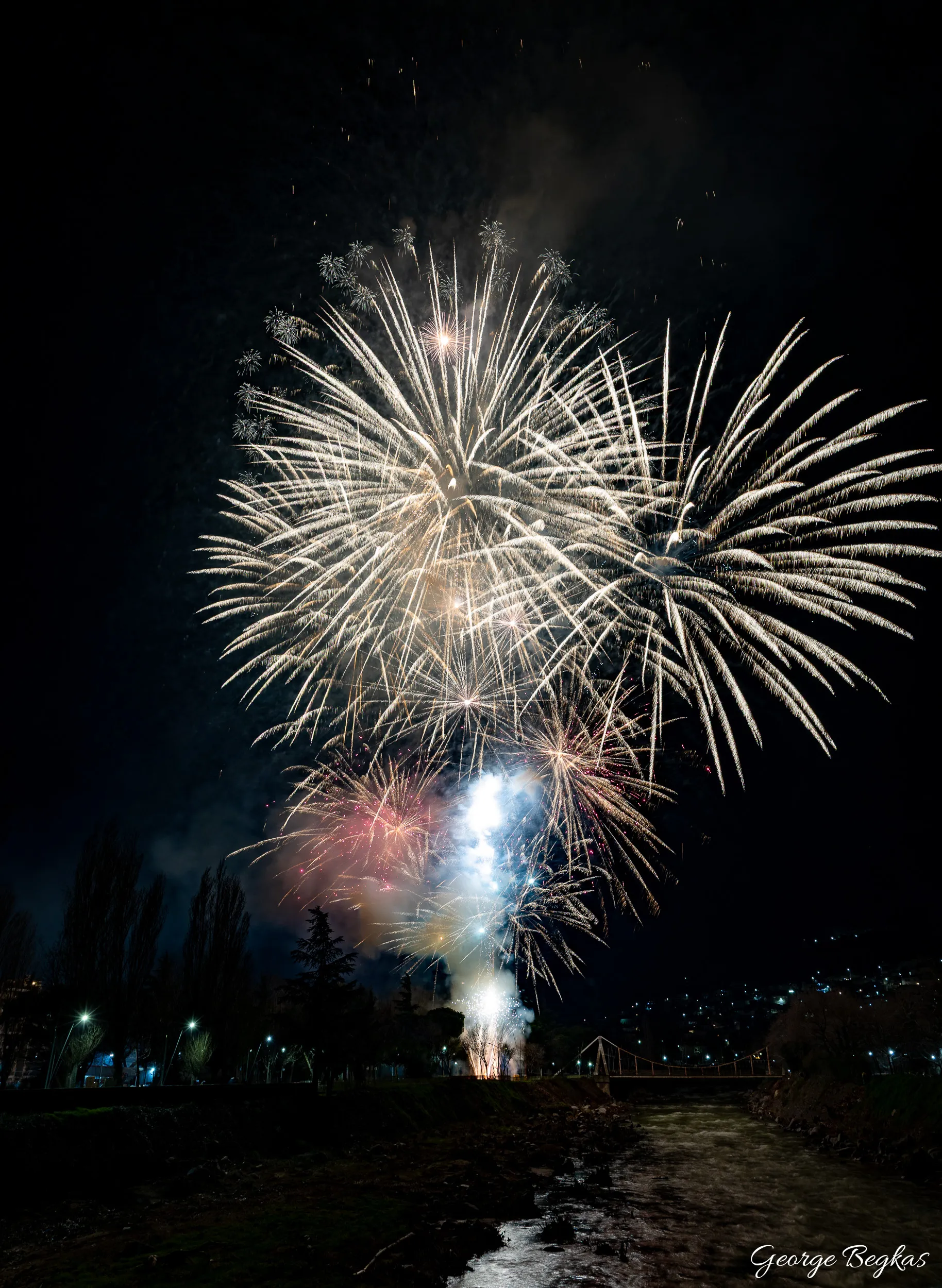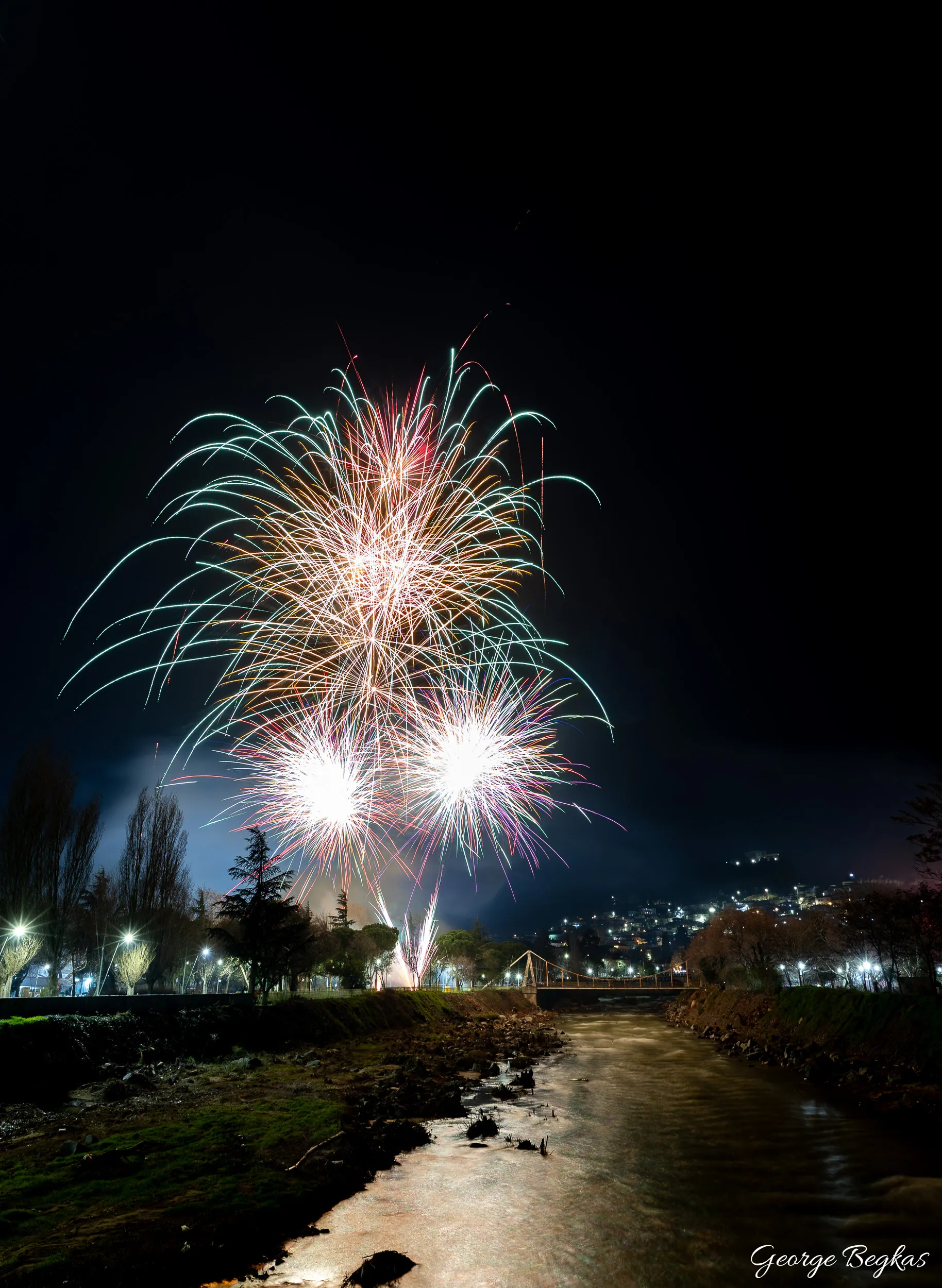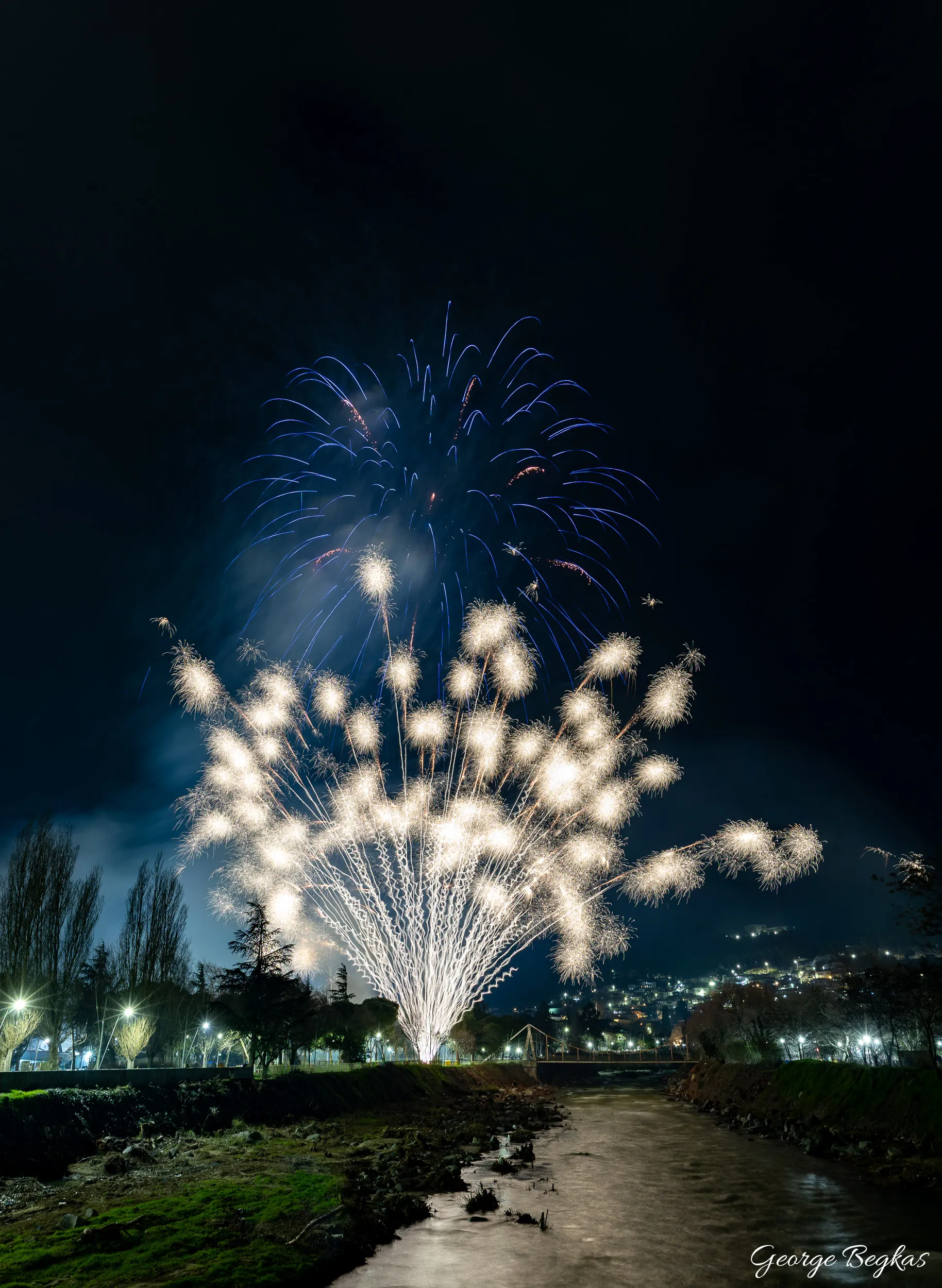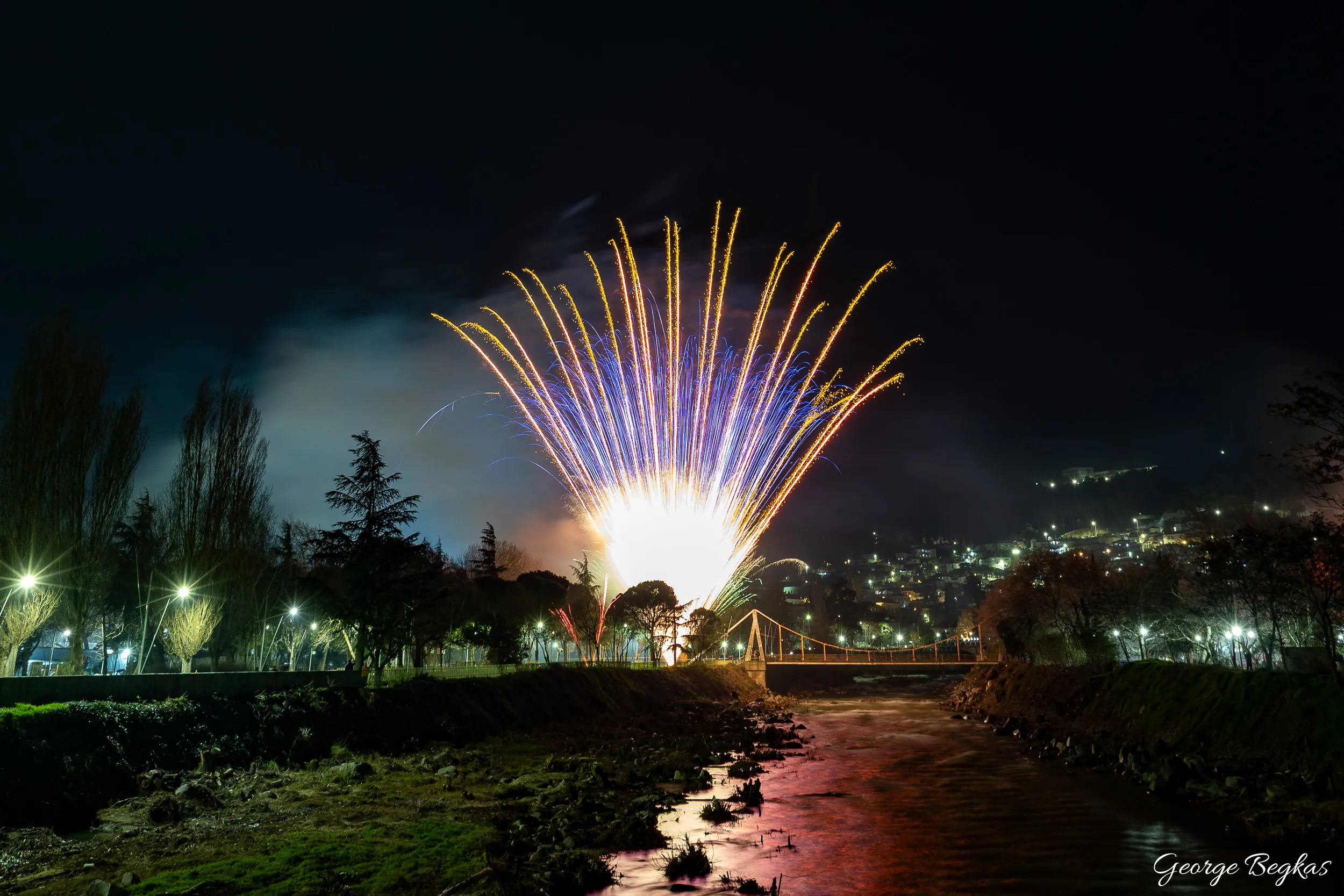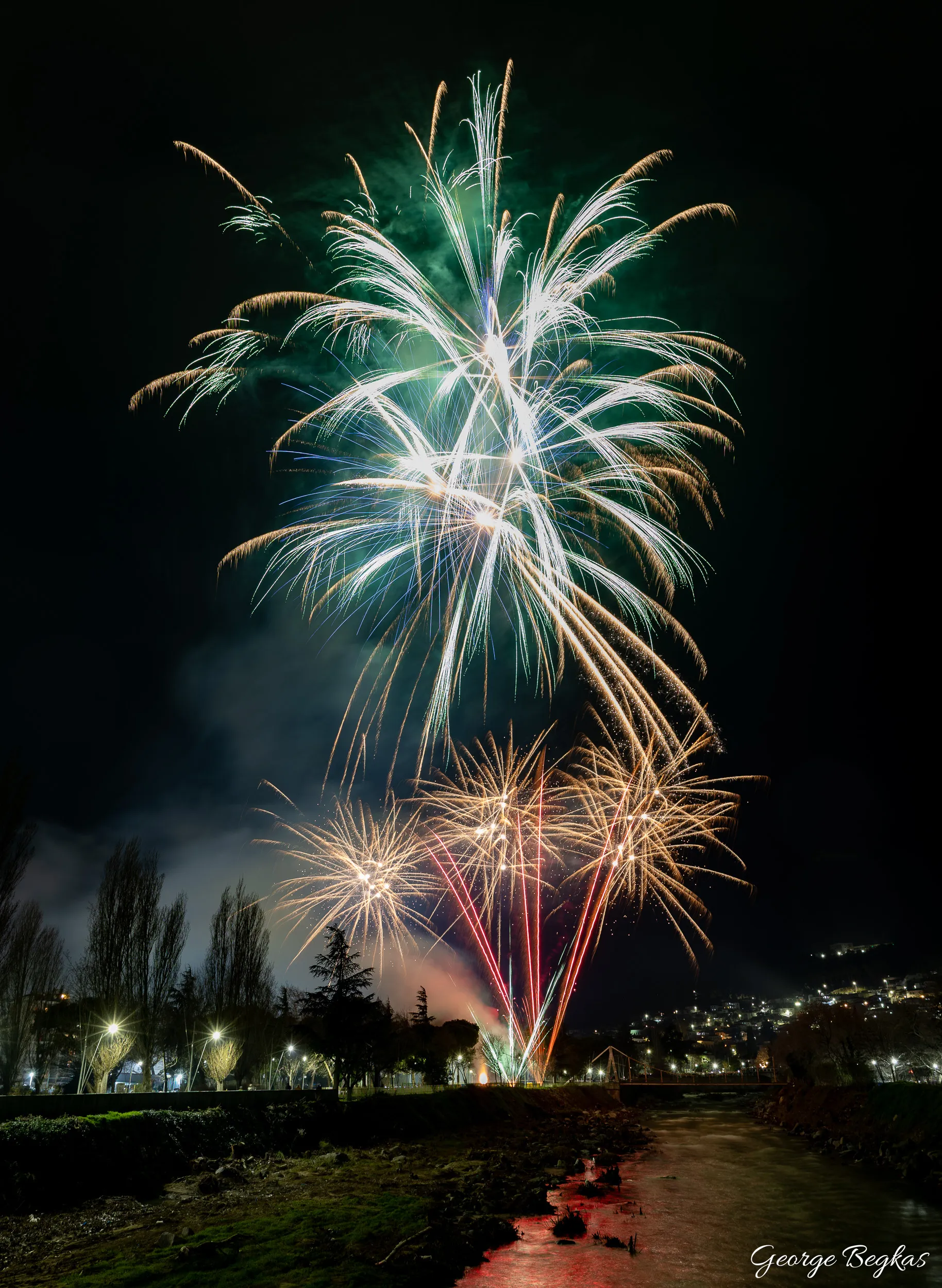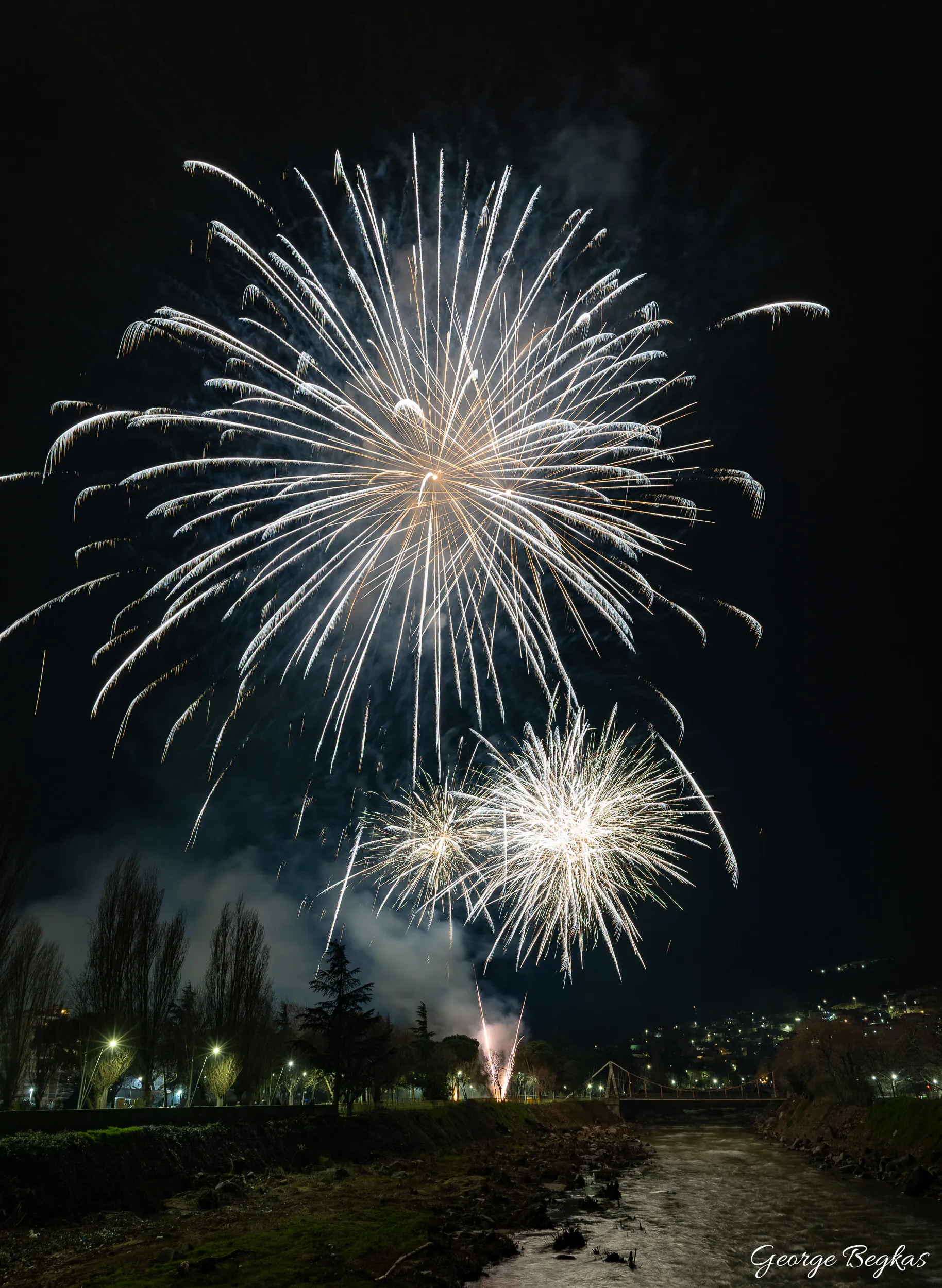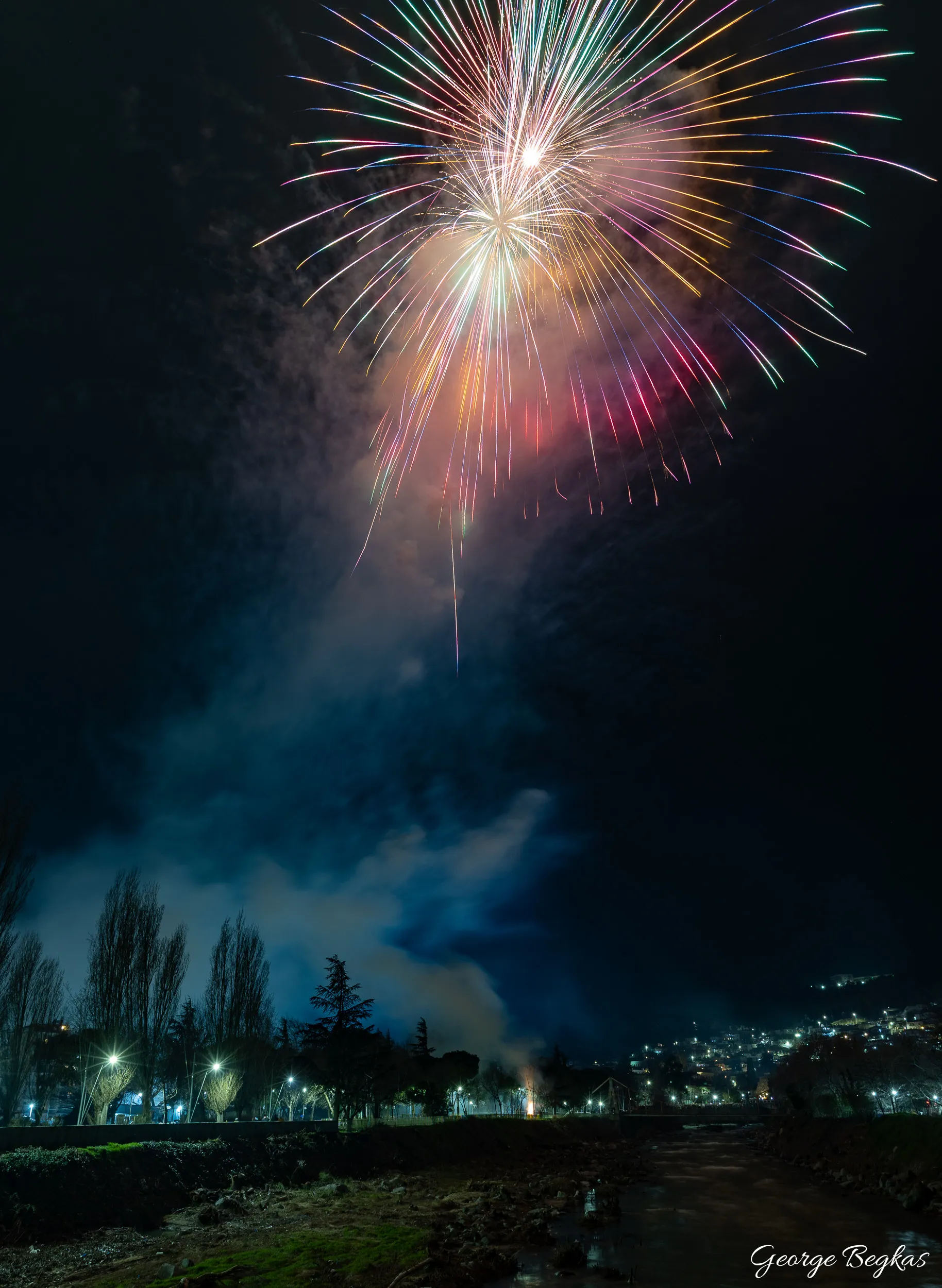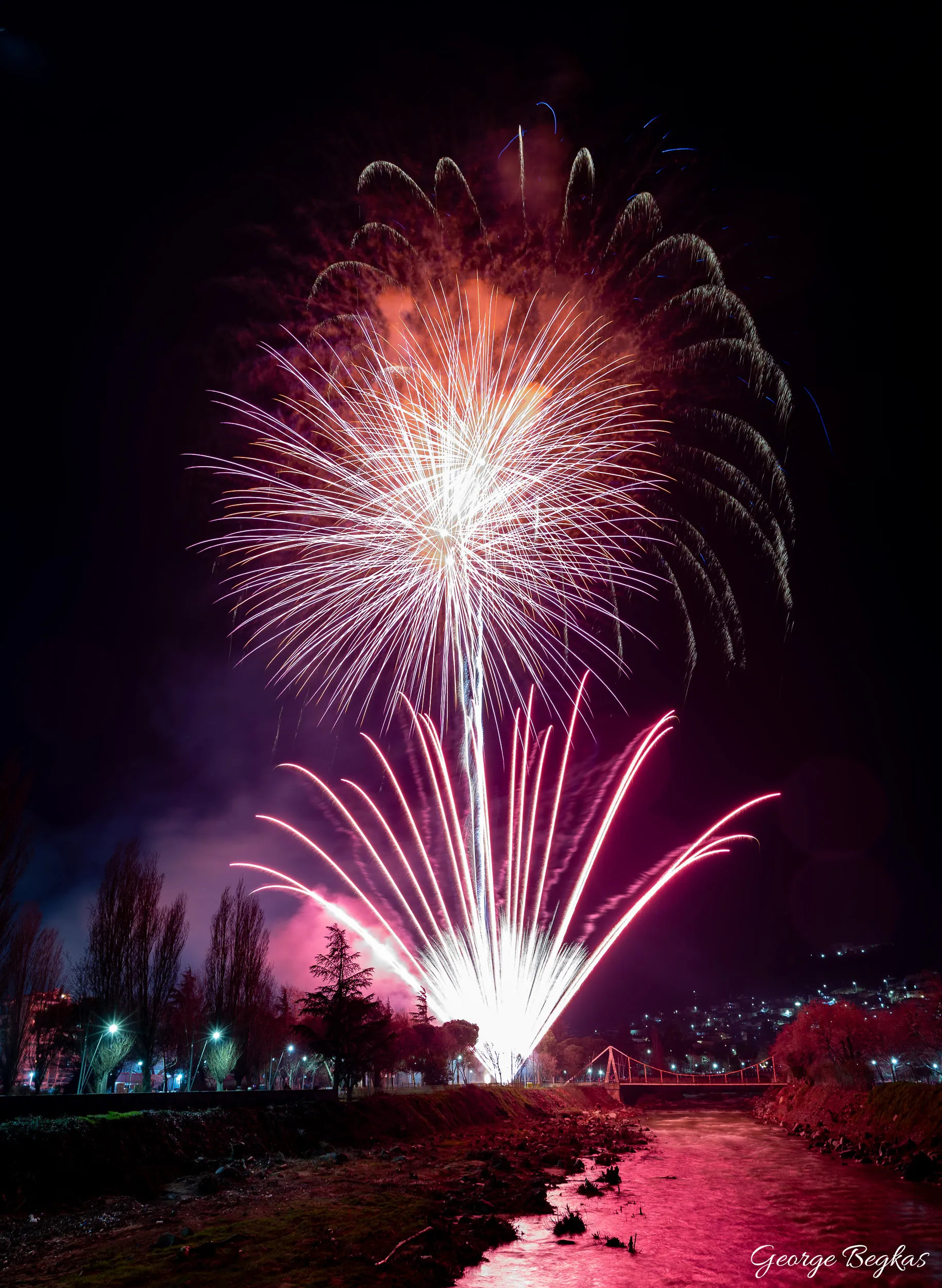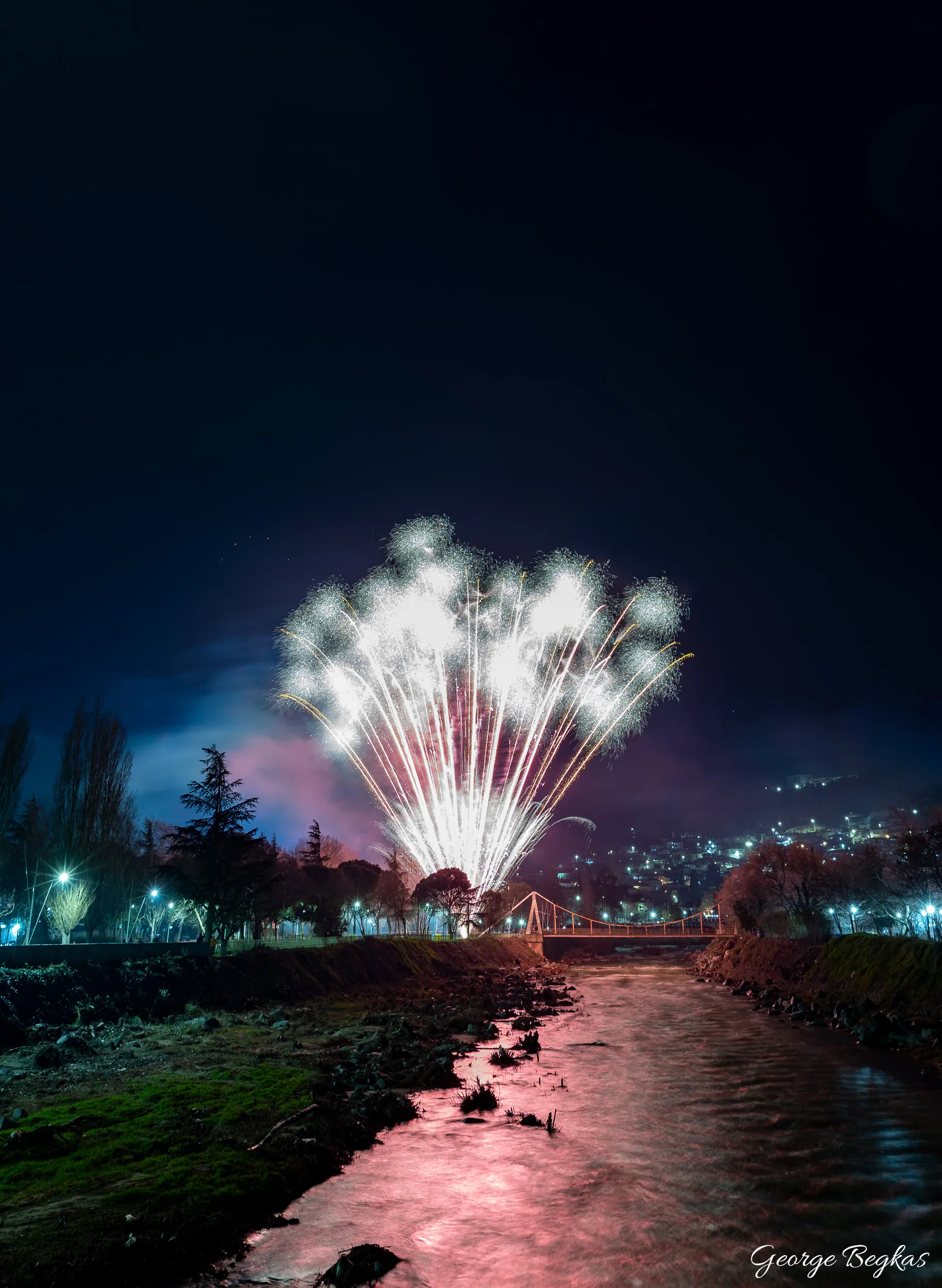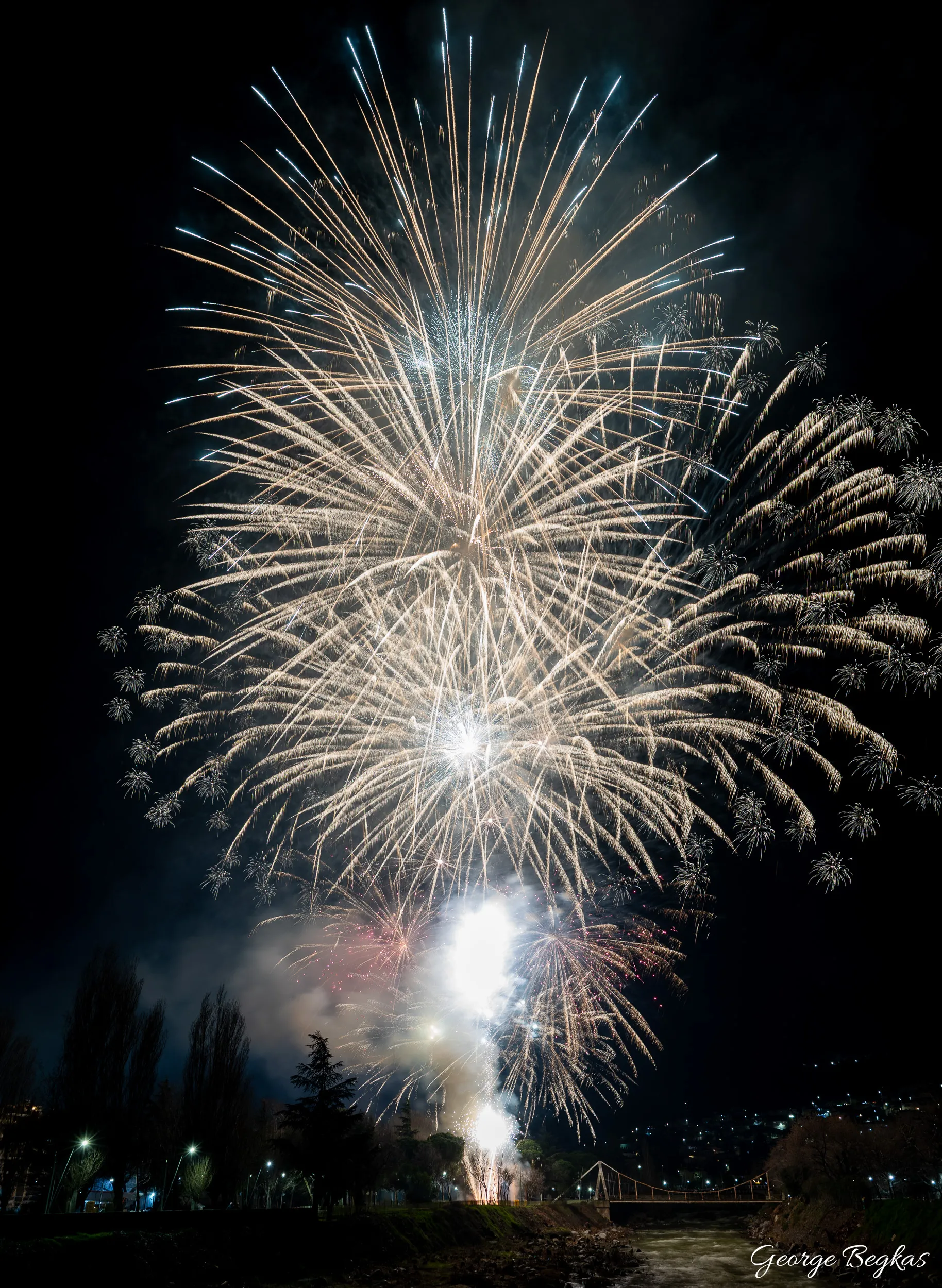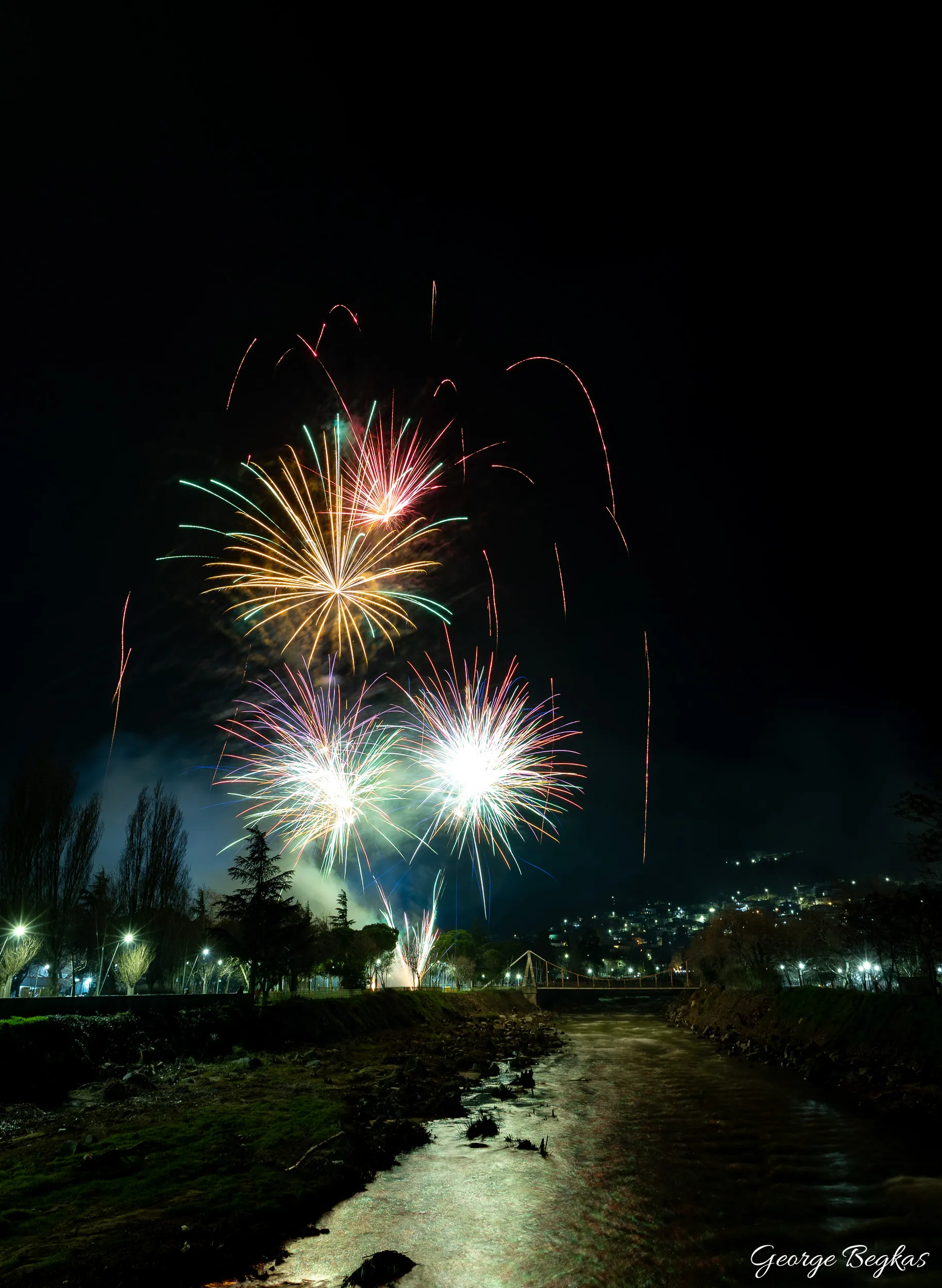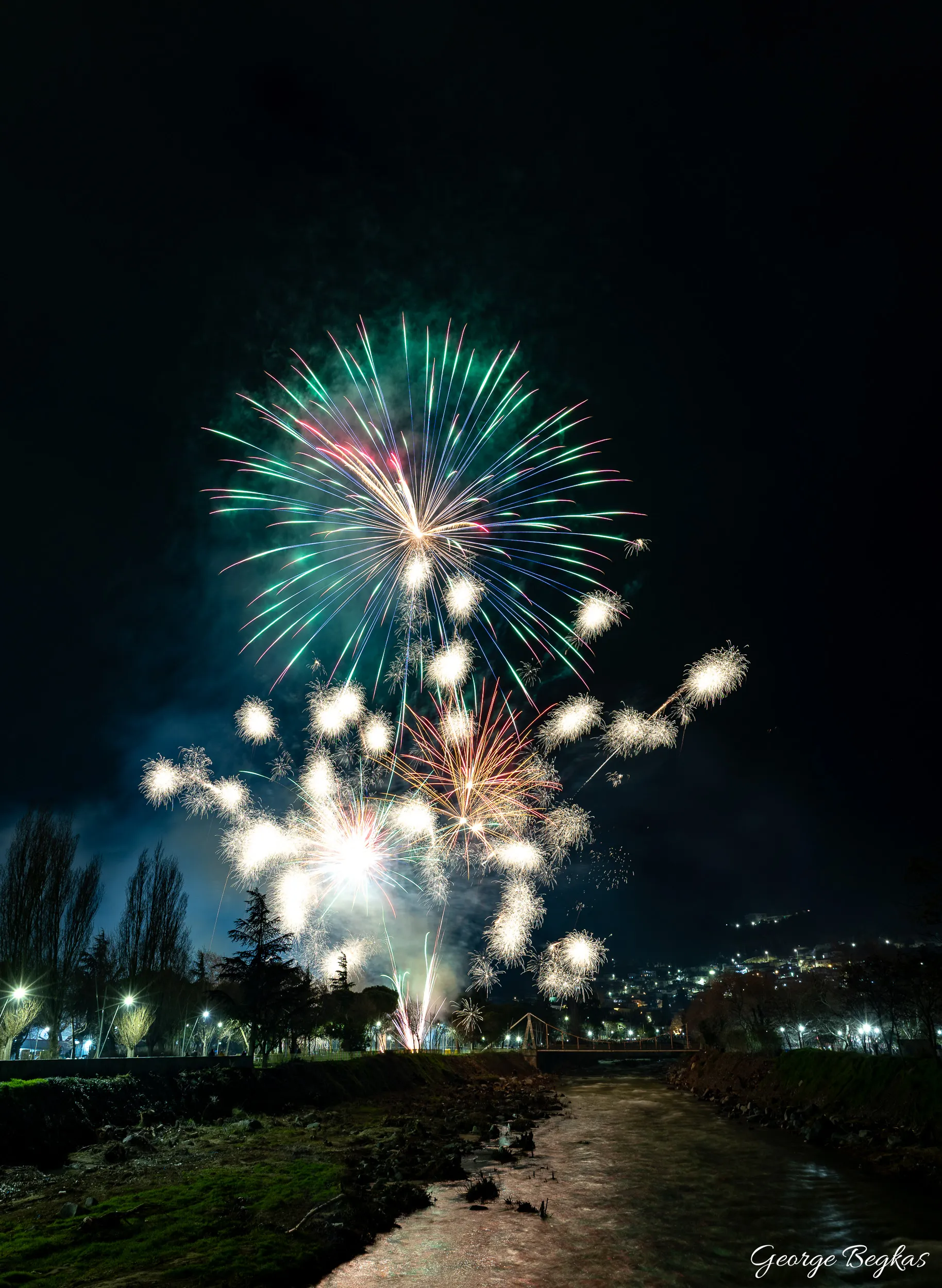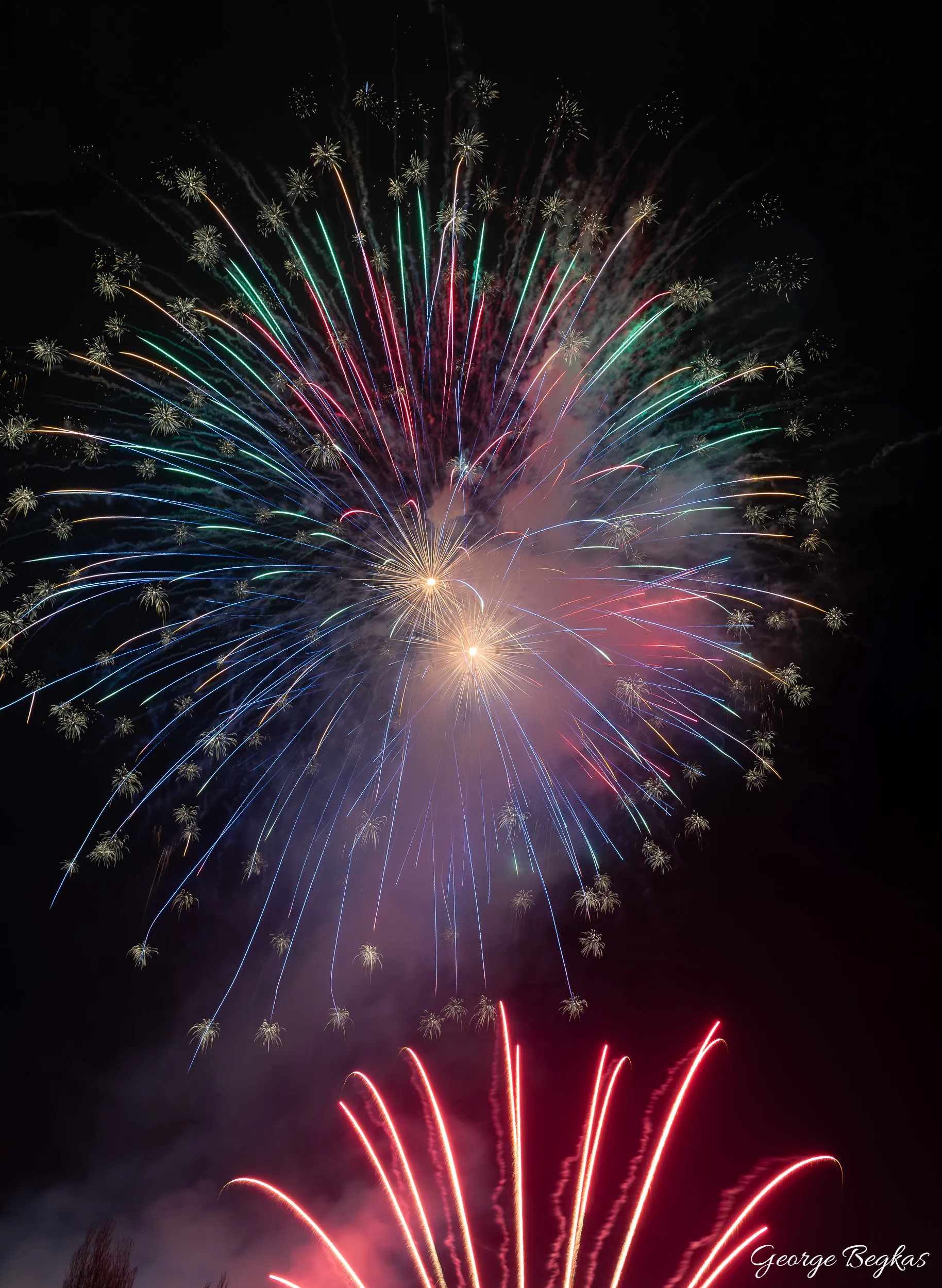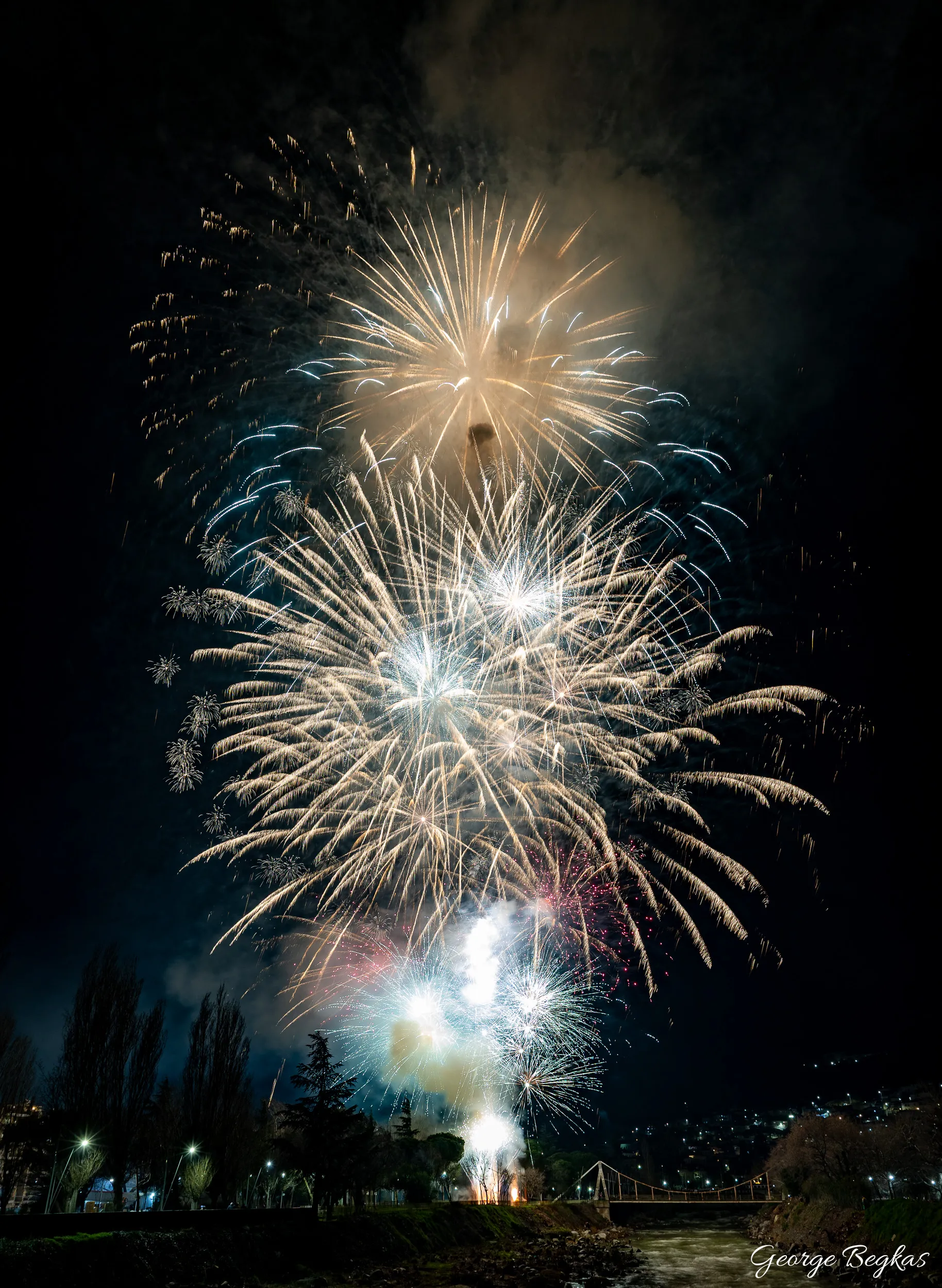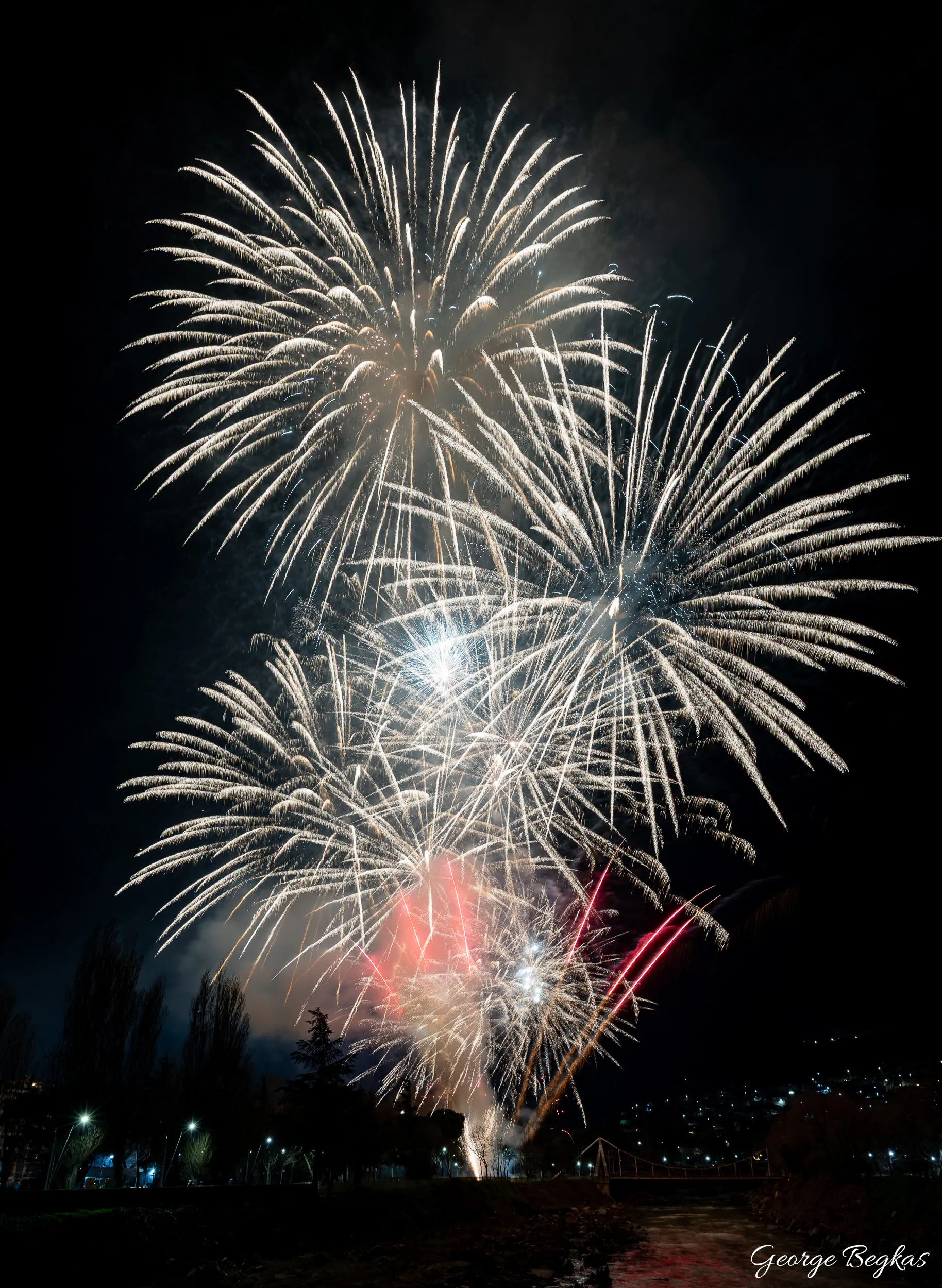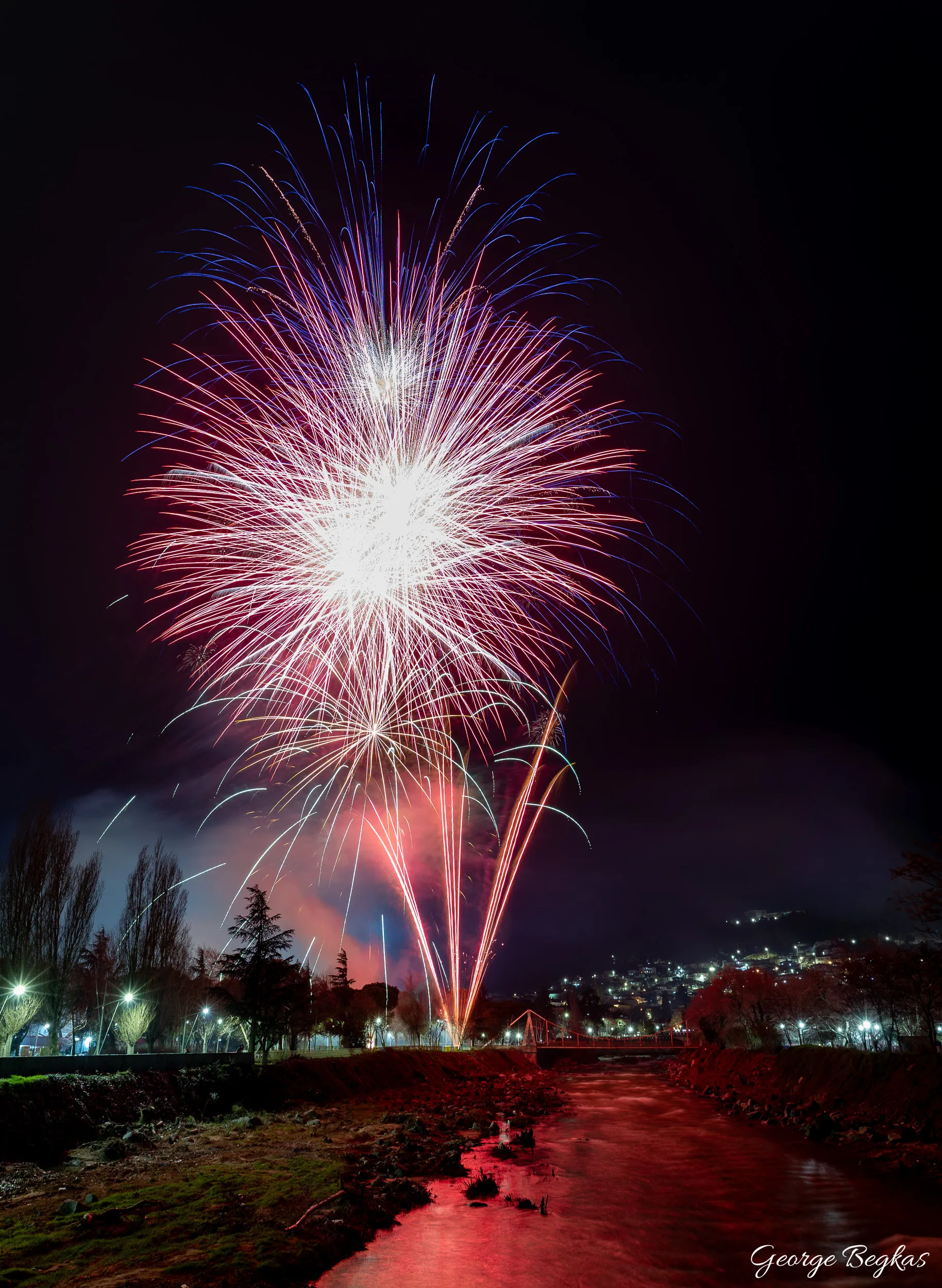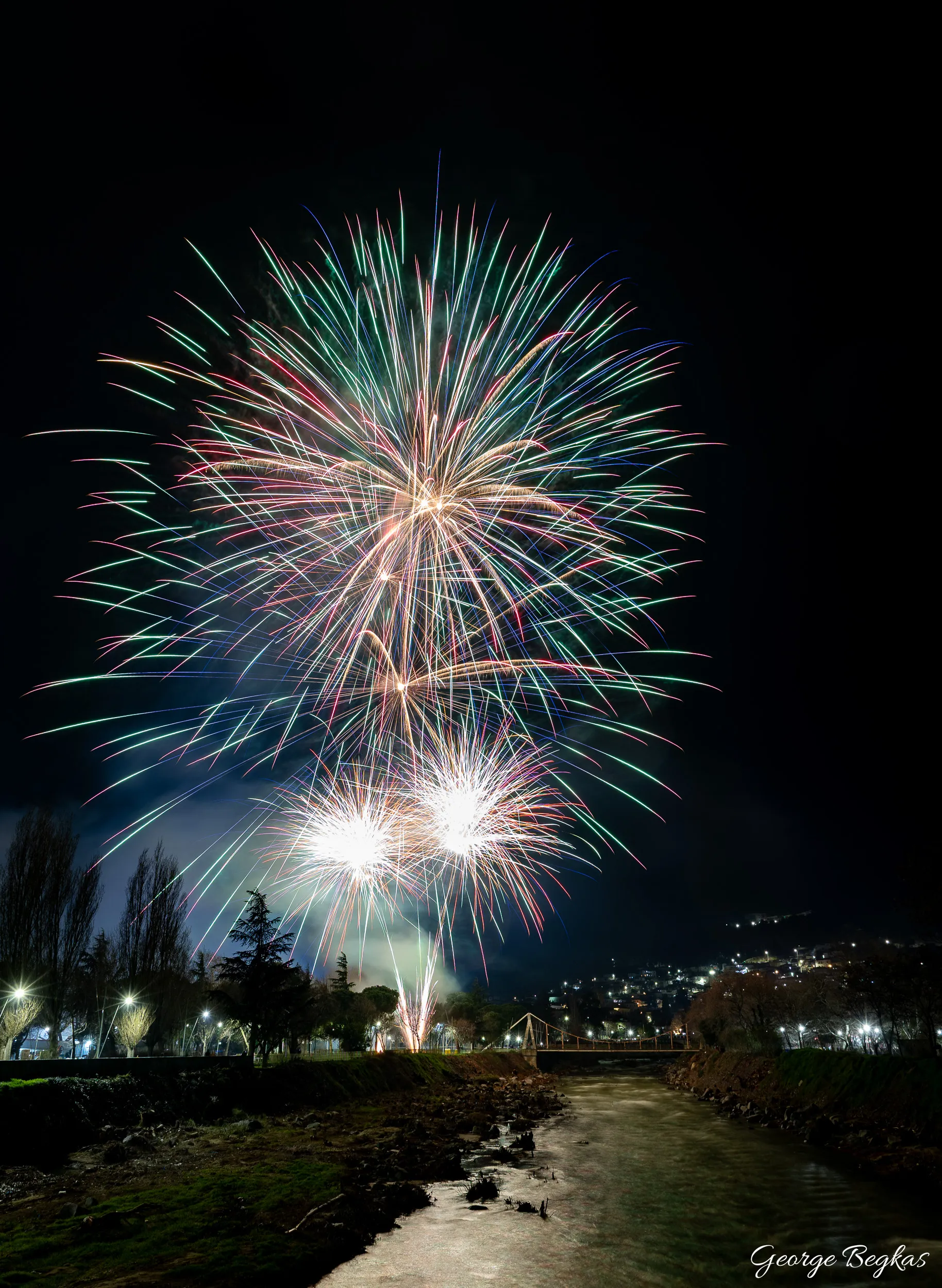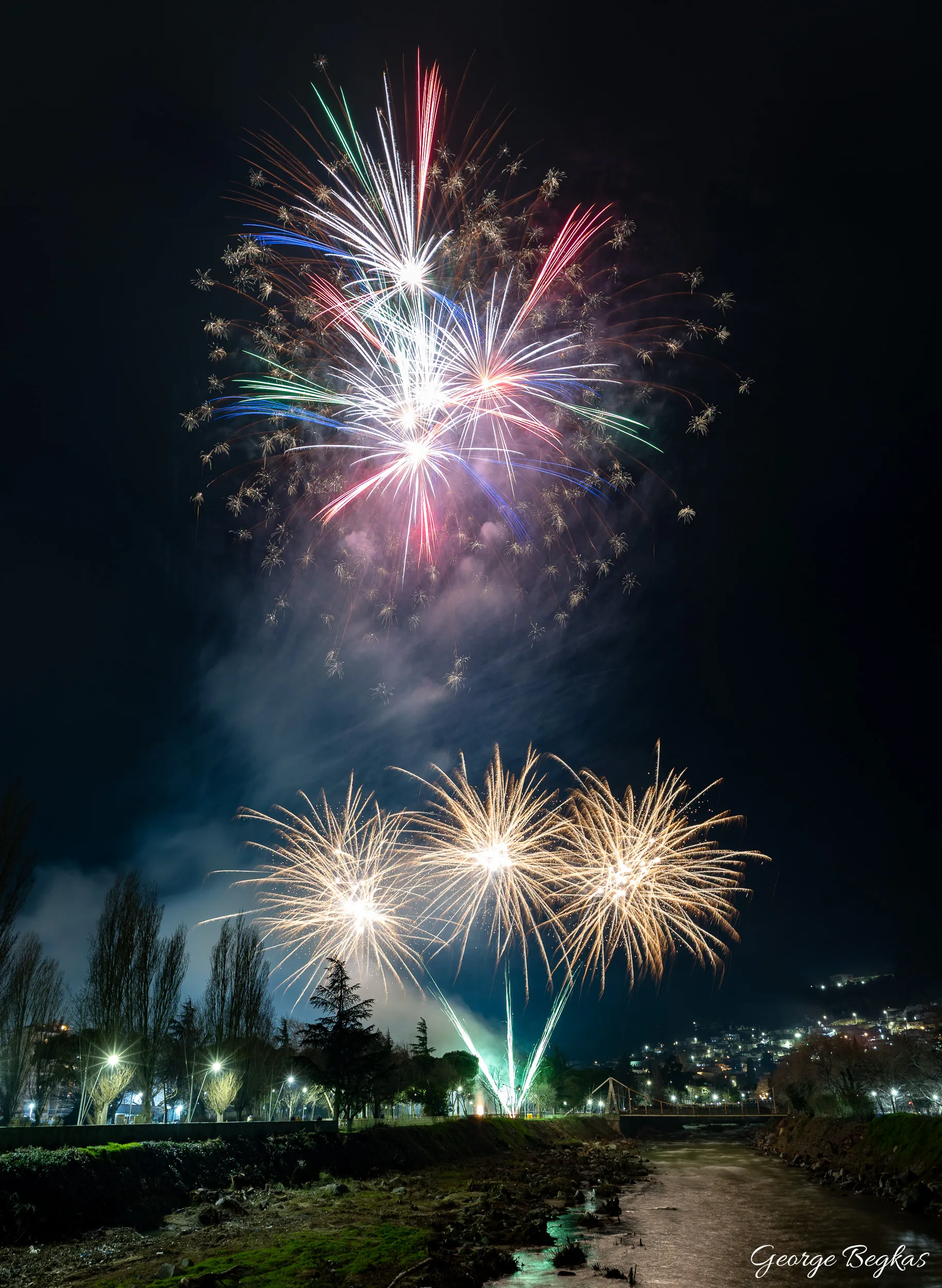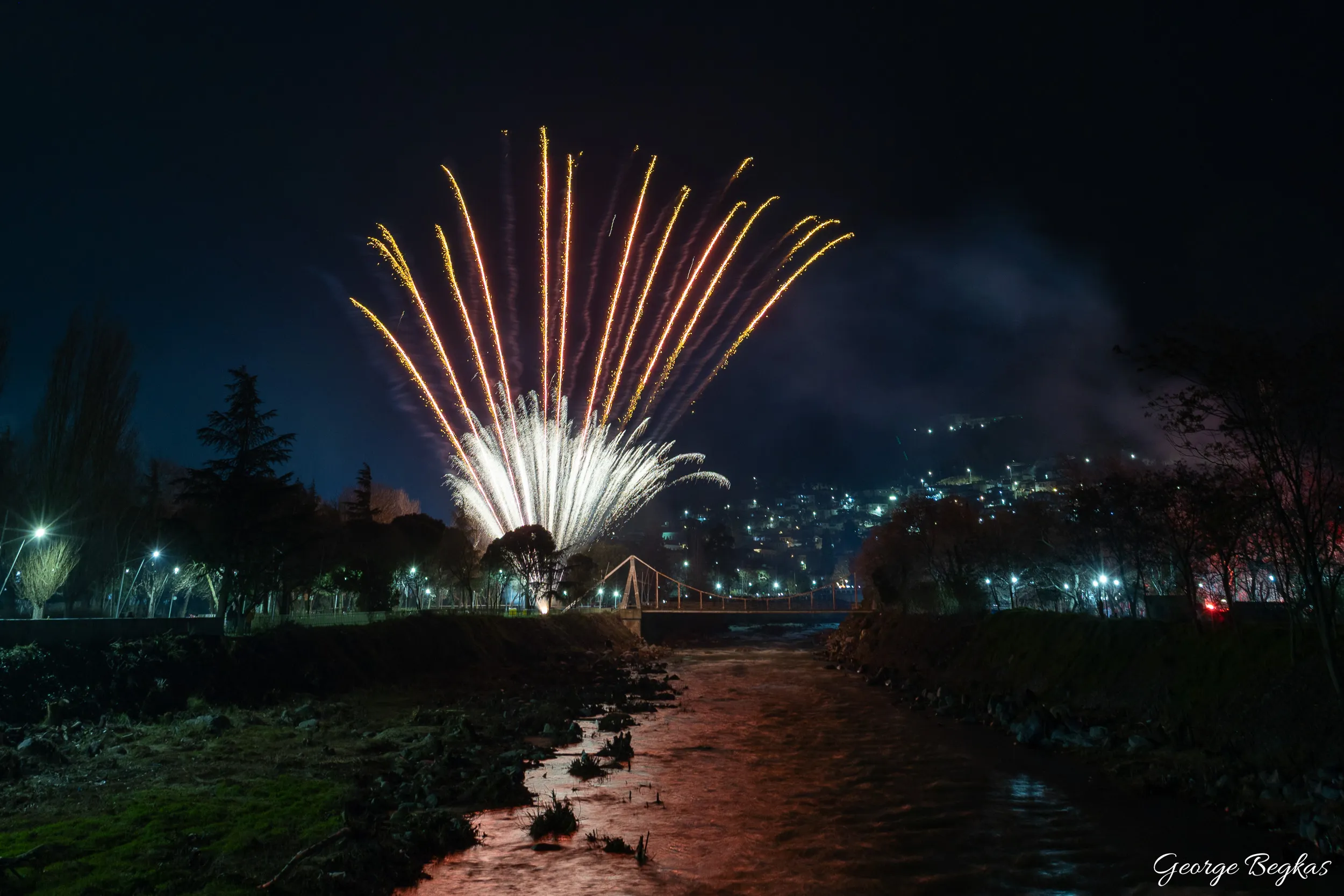
My hometown hosts one of the largest carnivals in Greece every year. The celebrations traditionally conclude with the burning of the Tsar on the banks of the town’s river, followed by a spectacular fireworks display. In 2026, however, heavy rainfall caused the river to rise significantly, forcing the cancellation of the burning ceremony. The fireworks show, fortunately, went ahead as planned, and it was an opportunity I was eager to capture with my camera.
My original plan was to photograph the display from the balcony of my apartment, which overlooks the area where the show takes place. I set up my camera and tripod and waited. At the last minute, though, I decided to move to the riverside park for a better vantage point. Once there, I discovered that access to the park was restricted, as the fireworks were being launched from within it. Instead, I made my way to a nearby bridge spanning the river, just a short walk away. As it turned out, the bridge offered an even better view of the show.
Since this was only the second fireworks display I had photographed, I spent some time researching the technical side of fireworks photography beforehand. During the twenty minutes between finding my shooting location and the start of the show, I quickly worked my way through a few guides I found online.
In theory, the process was straightforward: switch to manual focus, focus on a point near where the fireworks would appear, stop down the aperture, and either use a long shutter speed or shoot in Bulb mode. In practice, I opted for Bulb mode and used my phone as a remote shutter release to minimise any camera movement.
Unfortunately, a few raindrops found their way onto the front element of my lens, and I had nothing with me to clean it. As a result, many of the images contained large circular spots, which I later removed during post-processing. Despite that setback, I was genuinely impressed with the results. Looking through the images during editing—as always, searching for ways to improve—I realised that I had often left the shutter open a little too long, causing multiple fireworks bursts to overlap in the same frame. It’s a valuable lesson and something I’ll pay closer attention to the next time I have the opportunity to photograph a fireworks display.
All photographs were captured with a Canon R6 Mark II paired with a Canon RF 24–105mm F4–7.1 IS STM lens, mounted on a carbon fibre travel tripod.